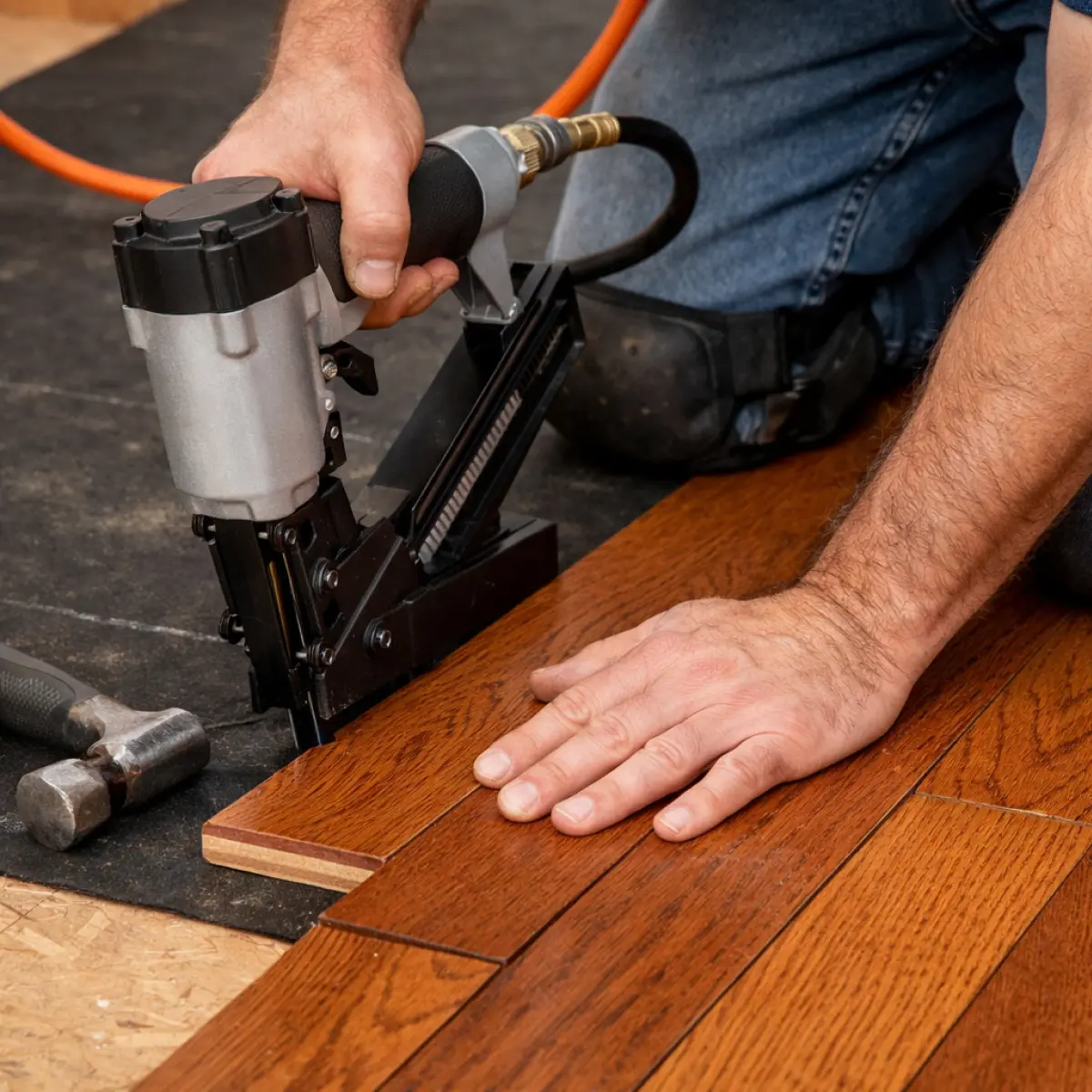
Hardwood flooring installation cost depends on labor rates, subfloor preparation, installation method, and total square footage. Solid hardwood flooring is typically installed using a nail-down method over a plywood subfloor, especially for standard 3/4 inch solid hardwood flooring. Installation complexity increases with denser species such as Brazilian Teak (Cumaru) hardwood flooring or Ipe hardwood flooring due to their extreme hardness. Proper acclimation, moisture testing, and professional tools are essential to ensure long-term performance.
Installation pricing may vary based on:
Wider boards, such as wide plank solid hardwood flooring, may require more precise installation planning.
Harder species such as:
May require stronger tools and more installation time.
Moderate hardness species such as:
Are typically easier to install.
For hardness comparisons, review the Janka Hardness Scale Guide.
Solid hardwood flooring is commonly installed over plywood subfloor.
Subfloor preparation may include:
Standard 3/4 inch solid hardwood flooring thickness supports secure nail-down installation. See 3/4 Inch Solid Hardwood Flooring for structural details.
Installation cost may also include:
Freight and material delivery are separate from labor costs. See Hardwood Flooring Delivery & Freight Guide for shipping details.
Compared to tile flooring: Tile requires mortar, grout, and curing time.
Compared to luxury vinyl flooring: LVP may allow floating installation.
See Hardwood vs Tile Flooring and Solid Hardwood vs Luxury Vinyl Flooring for material comparison.
When estimating total project cost:
See How Much Does Solid Hardwood Flooring Cost for full pricing evaluation.
Reviewing samples allows better planning of board width and species before committing to full installation. Order Hardwood Samples to compare species under your interior lighting.