When comparing hardwood vs tile flooring, the main differences involve material composition, comfort underfoot, durability, installation requirements, and long-term value. Solid hardwood flooring is milled from natural timber, typically in 3/4 inch thickness, offering refinishing flexibility and decades of lifespan. Tile flooring is composed of ceramic, porcelain, or stone materials known for moisture resistance and surface hardness. While tile provides strong resistance to water and surface wear, hardwood flooring delivers warmth, natural appearance, and superior resale appeal in residential environments.
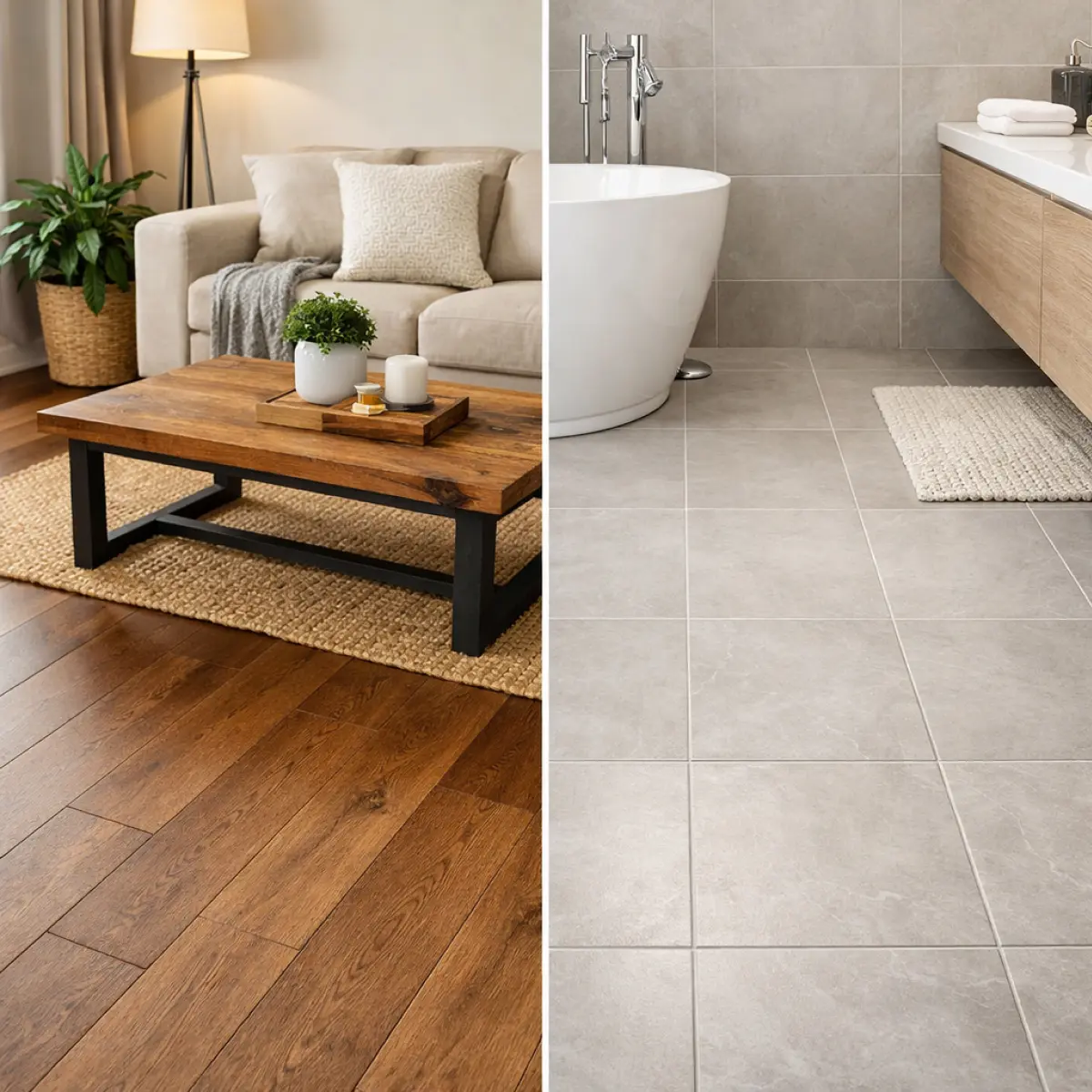
Solid hardwood flooring:
Tile flooring:
Learn everything you need to know about durability, color variation, and performance in our Brazilian Cherry (Jatoba) hardwood flooring guide , ideal for high-traffic and luxury interiors.
For species hardness comparison, review the Janka Hardness Scale Guide.
Explore the strength, moisture resistance, and long-term value of exotic hardwood in our Brazilian Teak flooring guide , a top choice for both residential and commercial spaces.
See 3/4 Inch Solid Hardwood Flooring for structural details.
Tile flooring may vary widely in cost depending on material type.
Solid hardwood flooring cost depends on:
For detailed cost planning, review Hardwood Flooring Cost Per Square Foot.
Homes with solid hardwood flooring are often perceived as premium compared to homes with tile in primary living spaces. Hardwood flooring adds warmth and natural aesthetic appeal that may enhance long-term property value.
Evaluating natural wood grain and tone in your own space provides better comparison than showroom lighting. Order Hardwood Samples to experience solid hardwood species before final decision.