Janka Hardness Scale Guide for Hardwood Flooring

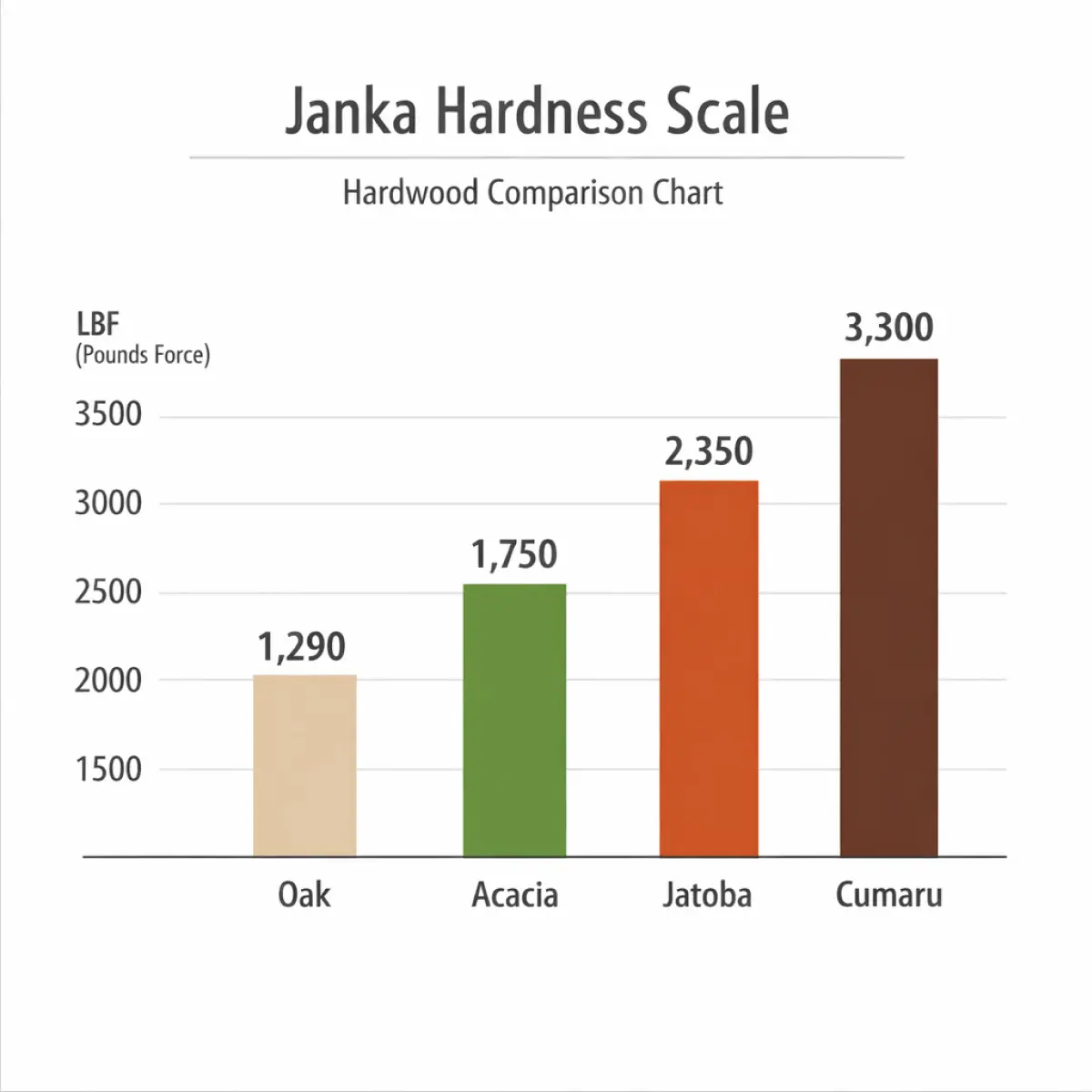
The Janka hardness scale measures a wood species’ resistance to denting and wear. The rating is determined by the force required to embed a steel ball halfway into the wood surface. Higher Janka ratings indicate greater hardness and stronger resistance to impact from foot traffic, furniture, and daily use. Common hardwood flooring species such as Oak, Acacia, Brazilian Cherry (Jatoba), and Cumaru vary significantly in hardness. Understanding Janka ratings helps homeowners choose flooring that balances durability, appearance, and long-term performance.
Measuring hardwood flooring area for cost per square foot estimation

What Is the Janka Hardness Test?

The Janka test measures how many pounds of force are required to press a 0.444 inch steel ball halfway into a wood sample. The result is expressed as a numerical rating.

Higher numbers indicate:

The test does not measure scratch resistance from sharp objects but focuses on denting resistance.

Our In-Stock Collection

Each species is selected for performance, milling precision, and grading consistency.

Solid Oak Hardwood Flooring

Solid Oak Hardwood Flooring

Classic, versatile, and architect-preferred. Oak remains the industry benchmark for residential hardwood flooring. It balances hardness, workability, and timeless appeal.

Learn more
Acacia Solid Wood Flooring

Acacia Solid Wood Flooring

Striking grain contrast with elevated hardness performance. Acacia delivers distinctive visual character while maintaining strong durability in high-traffic environments.

Learn more
Brazilian Cherry (Jatoba) Hardwood Flooring

Brazilian Cherry (Jatoba) Hardwood Flooring

Deep, rich red tones with elevated Janka hardness. Jatoba is ideal for luxury homes seeking warmth, density, and dramatic finish depth.

Learn more
Cumaru (Brazilian Teak) Hardwood Flooring

Cumaru (Brazilian Teak) Hardwood Flooring

Extremely dense and structurally stable. Cumaru offers bold grain and high dent resistance, making it one of the strongest solid hardwood options available.

Learn more

Janka Hardness Ratings by Species

These ratings show significant differences in density and impact resistance between species.

Red Oak

Approximately 1290

White Oak

Approximately 1360

Acacia

Approximately 1700 to 2200 depending on variation

Brazilian Cherry (Jatoba)

Approximately 2350

Cumaru

Approximately 3540

Why Janka Hardness Matters

Higher hardness ratings generally provide:

However, extreme hardness may require specialized installation tools due to density. Choosing the right balance of hardness and workability is important.

Hardest Common Hardwood Flooring Species

Among common residential hardwoods:

Species selection should consider both durability and aesthetic preference.

Does Higher Janka Rating Mean Better Flooring?

While higher hardness increases dent resistance, other factors matter:

For most residential environments, moderate to high hardness species perform well when properly installed.

Janka Hardness vs Scratch Resistance

The Janka test measures dent resistance, not scratch resistance.

Scratch resistance depends more on:

Prefinished hardwood often includes protective coatings that improve surface wear resistance. You can order hardwood samples to see and feel the quality before making your final decision.

Best Hardwood for High-Traffic Areas

Species with higher Janka ratings such as:

May perform better in active households or frequently used rooms. Oak remains suitable for most residential installations when properly maintained. Explore our detailed guide on hardwood flooring price per square foot to better understand current costs and budgeting.

Frequently Asked Questions

For residential use, ratings above 1200 generally provide adequate durability. Higher ratings increase dent resistance.
Higher ratings increase hardness but may require more specialized installation due to density.
Among common residential species, Cumaru ranks extremely high on the Janka scale.
Harder, denser tropical species may reflect higher material cost due to sourcing and milling.