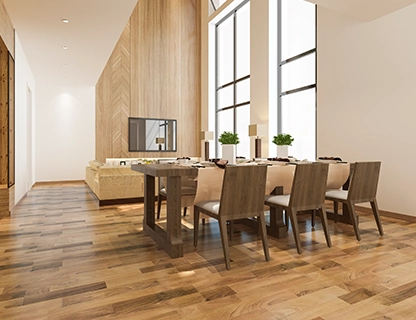
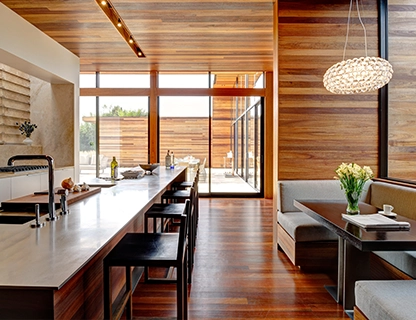
Wide plank solid hardwood flooring typically refers to boards 4 inches and wider, designed to create a more expansive and visually continuous floor surface. Compared to traditional narrow strip flooring, wide planks highlight natural grain movement and reduce the number of seams across a room. Available in species such as Oak, Acacia, Brazilian Cherry (Jatoba), and Cumaru, wide plank 3/4 inch solid hardwood flooring offers structural durability with strong aesthetic impact. Proper acclimation and subfloor preparation are critical to ensure long-term stability due to the increased board width.
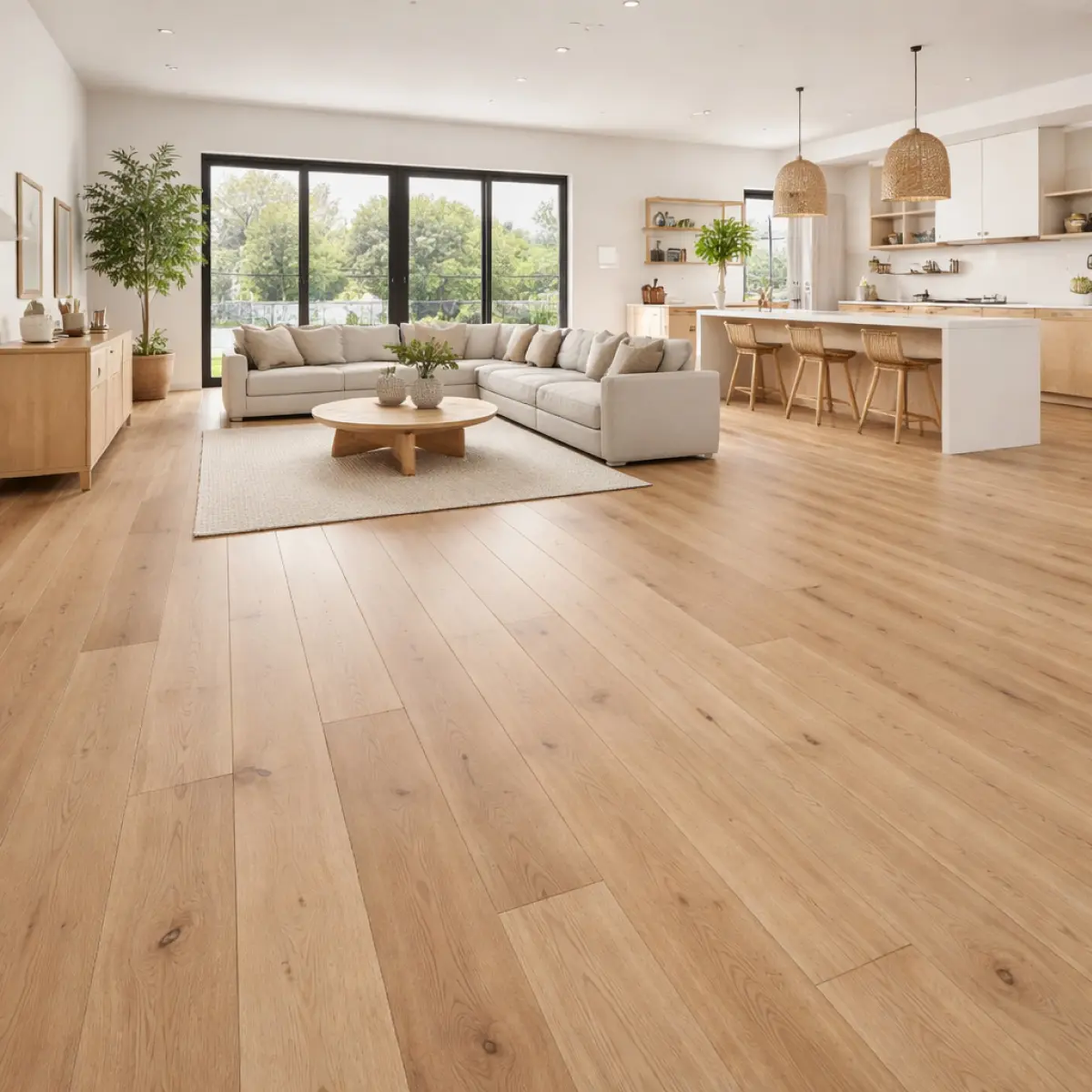
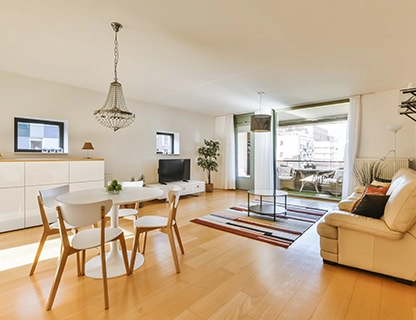
Wide plank flooring generally includes:
Some custom formats may exceed 6 inches, but proper milling and moisture control become increasingly important as width increases.
Each species is selected for performance, milling precision, and grading consistency.

Classic, versatile, and architect-preferred. Oak remains the industry benchmark for residential hardwood flooring. It balances hardness, workability, and timeless appeal.
Learn more
Striking grain contrast with elevated hardness performance. Acacia delivers distinctive visual character while maintaining strong durability in high-traffic environments.
Learn more
Deep, rich red tones with elevated Janka hardness. Jatoba is ideal for luxury homes seeking warmth, density, and dramatic finish depth.
Learn more
Extremely dense and structurally stable. Cumaru offers bold grain and high dent resistance, making it one of the strongest solid hardwood options available.
Learn moreWide planks are commonly used in luxury residential builds and open-concept spaces. Learn how to minimize wear and tear with our scratch-resistant hardwood flooring guide, perfect for homes with pets and heavy use.
Species selection impacts stability and visual variation.
Balanced hardness with neutral grain structure. Works well in both modern and traditional interiors.
Bold grain contrast and higher dent resistance compared to Oak.
Deep red tones with elevated hardness for formal spaces.
Extremely dense hardwood with rich golden-brown tones and superior dent resistance.
Wider boards naturally experience greater expansion and contraction compared to narrow strips.
Best practices include:
Solid 3/4 inch construction provides structural strength, but environmental control remains essential.
Choice depends on design preference and installation environment.
Wider boards may increase cost due to:
Final cost depends on species, grade, finish, and freight location. Delivered pricing should include square footage planning and waste factor calculation.
Recommended installation:
Proper installation reduces risk of cupping or movement. Understand the advantages and limitations of wood flooring in our solid hardwood flooring pros and cons guide, helping you make an informed decision.
Because plank width significantly affects appearance, reviewing a physical sample is recommended before final selection.