Solid Hardwood Flooring vs Engineered Hardwood Flooring

Solid hardwood flooring is milled from a single piece of timber, typically 3/4 inch thick, allowing multiple refinishing cycles and long-term durability. Engineered hardwood consists of a plywood or composite core with a thin hardwood veneer layer on top. While engineered flooring may offer improved dimensional stability in certain environments, solid hardwood generally provides greater lifespan, structural strength, and refinishing flexibility. Understanding the differences in construction, moisture performance, cost, and long-term value is essential when choosing between solid and engineered hardwood flooring.
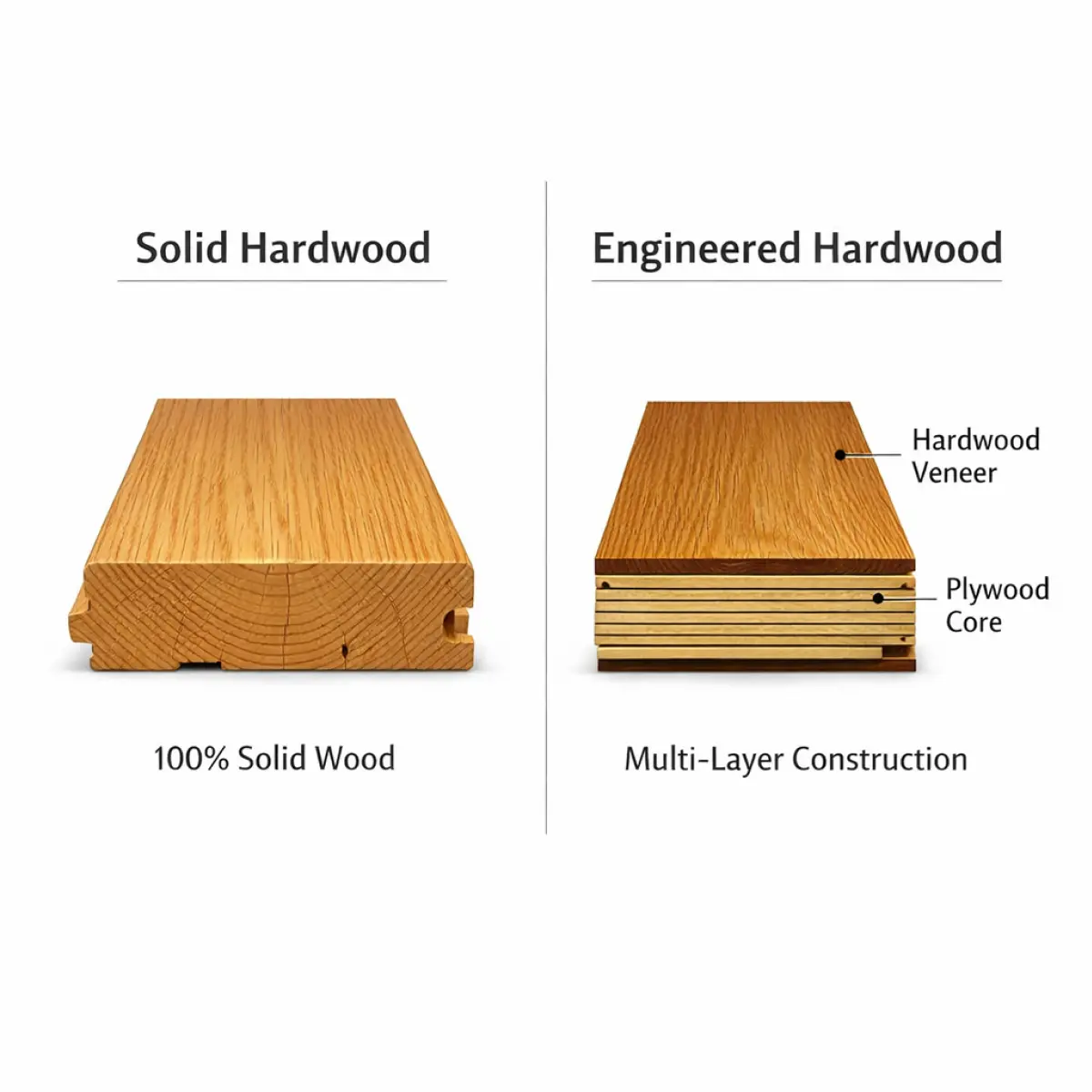
Solid vs engineered hardwood flooring cross-section comparison showing layered construction

Construction Differences

The structural composition directly affects durability and lifespan.

Solid Hardwood Flooring

  • Made from a single piece of natural wood
  • Typically 3/4 inch thick
  • Can be sanded and refinished multiple times
  • Installed using nail-down methods

Engineered Hardwood Flooring

  • Layered construction
  • Top hardwood veneer over plywood or composite core
  • Limited refinishing capability depending on veneer thickness
  • Often compatible with floating or glue-down installations

Our In-Stock Collection

Each species is selected for performance, milling precision, and grading consistency.

Solid Oak Hardwood Flooring

Solid Oak Hardwood Flooring

Classic, versatile, and architect-preferred. Oak remains the industry benchmark for residential hardwood flooring. It balances hardness, workability, and timeless appeal.

Learn more
Acacia Solid Wood Flooring

Acacia Solid Wood Flooring

Striking grain contrast with elevated hardness performance. Acacia delivers distinctive visual character while maintaining strong durability in high-traffic environments.

Learn more
Brazilian Cherry (Jatoba) Hardwood Flooring

Brazilian Cherry (Jatoba) Hardwood Flooring

Deep, rich red tones with elevated Janka hardness. Jatoba is ideal for luxury homes seeking warmth, density, and dramatic finish depth.

Learn more
Cumaru (Brazilian Teak) Hardwood Flooring

Cumaru (Brazilian Teak) Hardwood Flooring

Extremely dense and structurally stable. Cumaru offers bold grain and high dent resistance, making it one of the strongest solid hardwood options available.

Learn more

Durability and Lifespan

Solid hardwood flooring can last 50 years or more when properly installed and maintained. Its full-thickness structure allows repeated refinishing to remove surface wear. Engineered hardwood lifespan depends on veneer thickness. Thin veneer layers limit refinishing opportunities. For long-term ownership, solid hardwood generally offers superior lifecycle durability.

Refinishing Capability

Solid hardwood can typically be sanded and refinished multiple times due to its full-thickness wear layer. Engineered flooring may only allow limited refinishing, and some products cannot be refinished at all if the veneer is too thin. Refinishing flexibility significantly affects long-term value.

Moisture and Stability

Engineered hardwood is designed to provide greater dimensional stability in environments with moisture fluctuation due to its layered construction. Solid hardwood requires proper acclimation and humidity control but performs reliably in climate-controlled residential spaces. Moisture management remains critical regardless of flooring type.

Cost Comparison

Engineered hardwood may have lower upfront material cost depending on brand and veneer thickness. Solid hardwood may have slightly higher upfront material cost but offers extended lifespan due to refinishing potential.

Total cost should consider:

Find the ideal options for busy households in our best hardwood flooring for high-traffic areas guide, focused on durability and performance.

Installation Methods

Solid hardwood typically requires nail-down installation over plywood or wood subfloor. Engineered hardwood may allow floating, glue-down, or staple-down methods depending on product type. Installation choice depends on subfloor conditions and structural requirements.

Resale Value and Long-Term Investment

Solid hardwood flooring is often perceived as a premium long-term investment due to its durability and refinishing flexibility. Homes with solid hardwood flooring may command stronger resale appeal compared to thinner veneer engineered alternatives. You can order hardwood samples to see and feel the quality before making your final decision.

When to Choose Solid Hardwood

Choose solid hardwood if:

When to Choose Engineered Hardwood

Engineered flooring may be considered when:

Each application should be evaluated based on structural environment. Learn how to minimize wear and tear with our scratch-resistant hardwood flooring guide, perfect for homes with pets and heavy use.

Frequently Asked Questions

Solid hardwood offers longer lifespan and refinishing flexibility. Engineered hardwood may offer improved stability in certain environments.
Some engineered products can be refinished depending on veneer thickness, but typically fewer times than solid hardwood.
Solid hardwood may have higher upfront cost but can offer greater long-term value due to extended lifespan.
Solid hardwood generally lasts longer when properly installed and maintained.